
Local author John Gurda lectures a full house of visitors on the history of the Basilica of St. Josaphat.
Doors Open Milwaukee (DOMKE) is an annual event where many institutions in the City literally open their doors for tours by the general public. What is perhaps most wonderful about this event and others like it is that it gives folks of all persuasions the opportunity to go explore and become a greater part of the city that they live in (or in my case be interested in). Apparently this concept is not lost on the Catholic Church in Milwaukee, as several parishes and other Catholic sites participated in the event in September.

I ventured to several religious and secular sites in my visit to DOMKE 2014. The first of which was the chapel and crypt at Calvary Cemetery, in the Story Hill neighborhood. Mounted on the highest hill in the cemetery near the end of the 19th Century, it has stood in a practically abandoned state for nearly fifty years. However, the group Friends of Calvary Cemetery are in the process of restoring the chapel.


Left: Altar inside the chapel.
Right: Rose window above the chapel portal.

The only occupied resting place in the basement crypt, for Father Idziego Tarasiewicza.
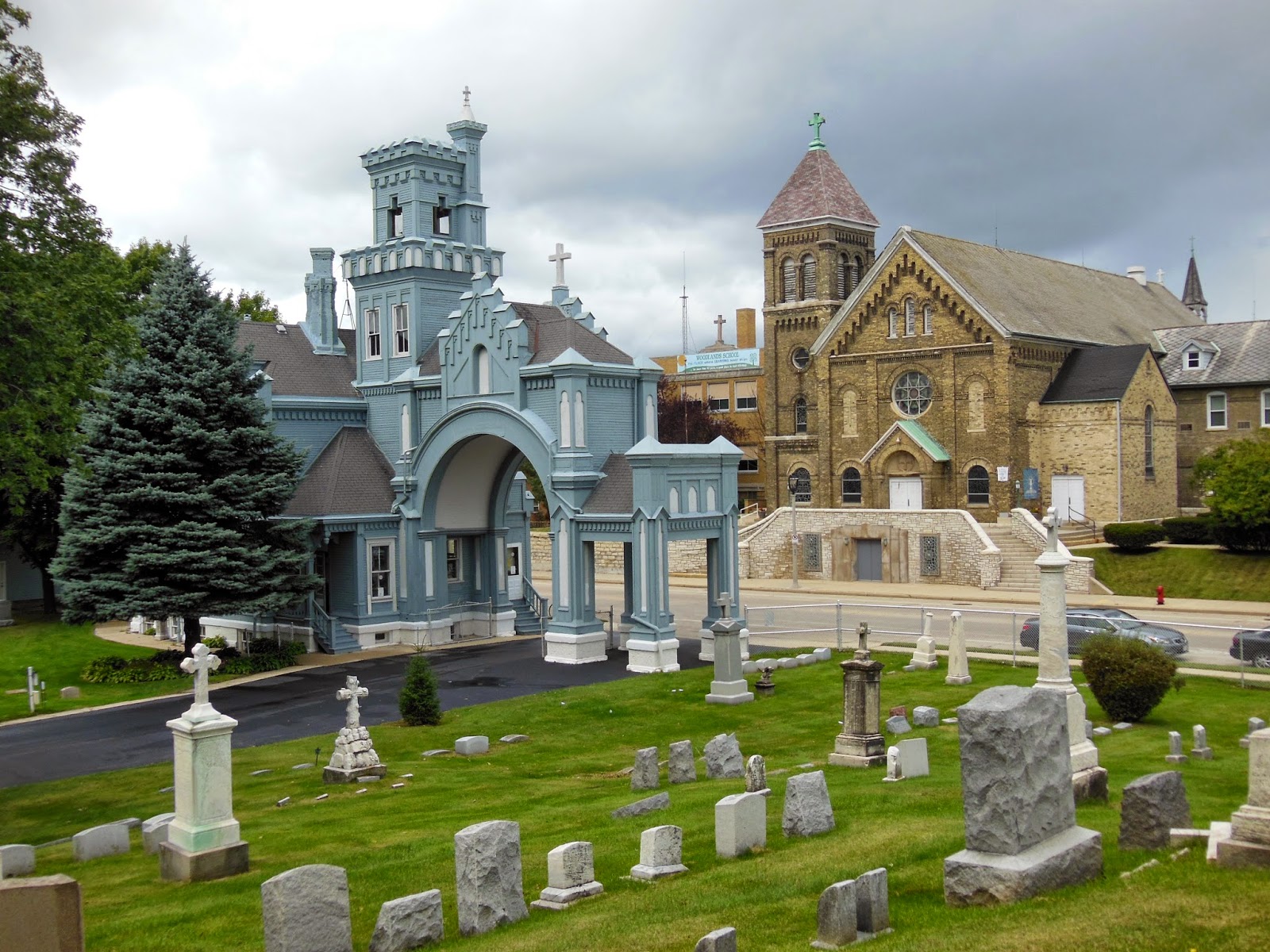
Entry to Calvary Cemetery, with Holy Cross Church, part of St. Vincent Palotti Parish, across West Bluemound Road.

Chapel for the Sisters of St. Francis of Assisi.


Left: A announcement for the Sisters Adoration Chapel.
Right: One of two impressive reliquaries in the main chapel.

Christ King Chapel at St. Francis de Sales Seminary, nearly adjacent to the Sisters' home near Milwaukee's southeastern-most city limits.


St. Francis de Sales Seminary is the oldest continually-run seminary in the United States.

A highlight of the day was certainly the lecture at the Basilica with local historian John Gurda. Gurda has made the City of Milwaukee a personal study for over forty years, and his knowledge of the City and connection with the Basilica neighborhood helped fill the pews for a nearly hour-long talk. I was five minutes late and was relegated to the narthex doors.


It's possible that the most photogenic holy water fonts I've ever seen reside at the Basilica.
Part 2 forthcoming pending some Photoshop-ing.
Sites visited in this post:
The Basilica of St. Josaphat
http://thebasilica.org/
Calvary Cemetery
Friends of Calvary Cemetery: http://www.friendsofcalvarycemetery.org/
Sisters of St. Francis of Assisi
http://www.lakeosfs.org/
Sisters of St. Francis of Assisi
http://www.sfs.edu/SFSHome
Additional Sources and a Disclaimer
I have been volunteering and been enthusiastic about the effort that Doors Open Milwaukee and its mother organization, Historic Milwaukee, Inc. have made for over two years now. Certainly I believe their annual event is worth attending, along with the numerous other programs that Historic Milwaukee, Inc. puts on. The basic facts that I shared in this post come from Door Open Milwaukee's event guide, available at: http://doorsopenmilwaukee.org/buildings/


